I’m gonna be there ’til the end
While doing the embarrassingly lazy equivalent of “research” into the origin of the universe on Wikipedia, I came across an interesting timeline for — wait for it — THE END OF THE UNIVERSE. With the cryptic name 1 E19s, this article lays out what’s expected to happen to the universe at time scales after 1 x 10¹⁹ seconds (or about 317 billion years).
Anyway, nothing particularly interesting happens in the first 1030 years of the universe, apart from entropy, the synthesis of heavy elements, and heat death, at which point all matter is swallowed up by black holes. Yawn.
BUT! After only 1036 years the universe will undergo a dramatic change: it will become entirely energy-based. The protons in the nucleus of every atom will start to decay. Oh yeah, every proton and every atom everywhere has existed since the birth of the universe, some 1.3 x 10¹³ years ago. Did I forget to mention that?
Proton decay is a process where matter turns back into energy as predicted by the Grand Unification Theory. The one problem here is that proton decay has never been observed and may not exist. Well screw you, it’s my story.
Just as radioactive elements decay, the protons that make up all matter will themselves begin to erode after a long enough time. So what you have is all the matter across the universe slowly breaking down into energy. This won’t create a big bang, but rather think of proton decay as you slowly turning up the heat in your oven until your dinner is burnt. Wait, bad example. Some like it hot, but some sweat when the heat is on. Is that any clearer?
Once this matter-decay energy has reached a high enough level, the plainly-titled grand unification energy predicted by GUT transforms “the electromagnetic, weak nuclear, and strong nuclear forces are fused into a single unified field.” This energy level is estimated to be around 1015 electron volts, and only a few orders of magnitude under the limits of the Plank temperature, Max Plank’s “these go to 11” idea of the greatest allowed energy state of matter before it begins to break apart. We now have enough energy throughout the universe that the four fundamental forces have become one.
So just as the universe started out as hydrogen, then built itself up into heavier elements, which combined to form compounds, which then created life, as the universe undergoes this change from a matter-based to an energy-based system, could the next stage of life be one entirely based on grand unification energy? Will life and intelligence survive beyond the heat death of the universe and survive into this brave new world? What would having control over electromagnetic, gravitational and atomic forces mean for whatever life that does exist?
I know it’s an old sci-fi staple, but seeing the theories behind energy-based life made it once again interesting to me.
While the heat death of the universe seems to be a bit of a downer, the Grand Unification Theory does provide some hope. Though the matter-based universe has run its course, it’s fascinating to speculate that at a certain time, when all matter has dissipated into energy, the state of the universe will reach a critical flashpoint where the four horsemen fundamental forces will unite and the universe will become pure energy (or at least 99 & 44/100% pure). Doesn’t this scenario sound somewhat similar to the conditions before the big bang? To anything living after that flashpoint, it would seem that the conversion from matter to energy would be their big bang.
Still no word yet on whether there will be a Crystal Waters / Information Society crossover club mix to herald that in.

 Maybe it’s incorrect to assume that time moves in a strictly linear fashion.
 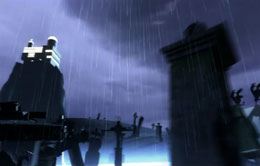 Jamie Hewlett’s design and animation support the themes established in the Demon Days album which this DVD is derived from. The premise, shown in broken 52″ flatscreen TVs hung askew on puched-in, graffitied walls, and studio recording equipment connected through a dizzying rat’s nest of patched, mismatched cables, states that all the money and success you enjoy will not stop the world from falling apart, and all those creature comforts will too succumb to systemic decay.
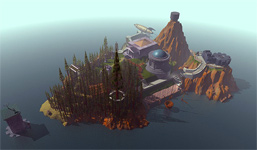 Each environment is an island unto itself (sometimes more or less literally so). Each game establishes a series of very detailed worlds, each with its own flora and fauna, themes and internal logic. Each is a puzzle; constrained but with enough room to allow the visitor to move freely, to explore and interact with this unique, peculiar environment. It’s comforting to know that the experience is bounded, but not limited — there can still be a great deal of variation inside its isolated shores, and maybe finding out what those limits are is part of the fun.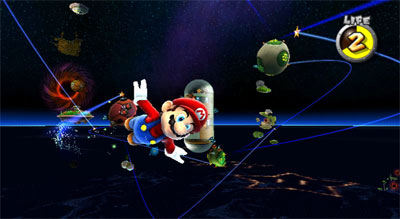
 which resulted in a shade of yellow something like the one here. But switching to the similar #FFCC00 for the color of the text seemed to fix that problem.